3/17/2009

How Congress Deprives Us Of Prosperity


By WALTER E. WILLIAMS |

Ask the average person which is the correct answer to the following question: Which president gave the biggest tax cuts for the rich — Reagan or Bush?

I would bet the rent money that you would not get the correct response, which is: Presidents have no taxing authority. Article I, Section 8 of the U.S. Constitution says: "The Congress shall have power to lay and collect taxes, duties, imposts and excises."

I know that many politicians and news media people read my column. How do we characterize them if they continue to speak of presidents cutting or raising taxes?

Another tax question: If there's an imposition of a property tax on your land, who pays the tax? I guarantee you that land does not pay taxes; only people pay taxes. That means a tax on your land is a tax on you.

You say, "Williams, that's pretty elementary, isn't it?" But what do you say to a politician or news media people who propose increasing corporate taxes as means to get rich corporations to pay their rightful share of government?

They should be told that they speak nonsense because corporations, like land, do not pay taxes; only people pay taxes.

If a tax is levied on a corporation, and if it is to survive, it must raise the price of its product, or lower dividends or lay off workers. In each case, it is people, not some legal fiction called a corporation, who bear the burden of any tax levied on the corporation.

An important subject area in economics called tax incidence says that the entity upon whom a tax is levied does not necessarily bear the burden of the tax. Some of the tax burden can be shifted to another party. That's precisely what corporations do and as such they are merely government tax collectors.

Here's another tax question: Which worker receives the higher pay: a worker on a road construction project moving dirt with a shovel or a worker moving dirt with a giant earthmover?

If you said the guy on the earthmover, go to the head of the class. But why? It's not because he's unionized or that employers just love earthmover operators. It's because having more capital (tools) makes him more productive and therefore he earns higher wages.

It's not rocket science to conclude that whatever lowers the cost of capital formation enables workers to have more capital to work with and enjoy higher wages. Policies that raise the cost of capital formation such as capital gains taxes, low depreciation allowances and high corporate income taxes, and thereby reduce capital formation, serve not the interests of workers, investors nor consumers.

Taxes also reduce transactions. I need my computer repaired. You and I agree that the job is worth $200. Suppose there's the imposition of a 30% income tax on you. That means you would net only $140 and might refuse the job.

You might suggest that if I were willing to pay you $285, you would do the job because at that price your after-tax earnings will be $200 — what doing the job is worth to you.

There's a problem. The repair job was worth $200 to me, not $285. So it's my turn to say the heck with it. Or would we — and society — be better off if you and I agreed to the repair job but did not tell anybody? I'd say yes, but we'd be criminals.

You might wonder how congressmen can get away with taxes and other measures that reduce our prosperity potential. Part of the answer is the anti-business climate promoted in academia and the news media. The more important reason is that prosperity foregone is invisible.

In other words, we can never tell how much richer we would have been without today's level of congressional interference in our lives and therefore don't fight it as much as we should.

Copyright 2008 Creators Syndicate, Inc

3/15/2009

Dreams of Our Fathers


"In all our associations; in all our agreements let us never lose sight of this fundamental maxim - that all power was originally lodged in, and consequently is derived from, the people"
.

George Mason

Something Wicked This Way Comes


via American Thinker

By J.C. Smith

The darkest times in human history have all begun when someone decided "not to let a serious crisis go to waste". In fact, it is in times of economic crisis that folks are most susceptible to the ideas of tyrants. We look for an answer, any port in a storm that will shield us from the unknown. And in our desire to be safe, we open ourselves up to things that we would never have dreamed of allowing in normal times.


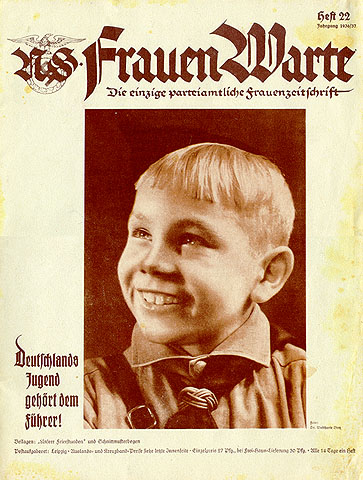
Consider, my friends that Germany in the 1930's was suffering from massive unemployment and high inflation, mostly due to the effects of the Great Depression. Hitler appointed Hjalmar Schacht as Minister of Economics to combat this and bring Germany into fresh prosperity. Schacht leaned on Keynesian Economics to this end, specifically in the areas of large public works programs supported by deficit spending. For those that don't know, deficit spending is when the Government purposefully spends more money than they receive through tax revenues. The theory is that by spending into deficit, the government creates jobs which increases consumer spending. This in turn, creates more business by supplying for the new spending being done.


The natural reaction that rational people have to deficit spending is to talk about the "burden of the national debt". The idea of course is that if we create debt now, future generations will have to pay that debt off and we therefore are saddling them with a burden that is unfair. Interestingly, this reaction has been in place since the 1930's when Keynes first introduced his theory. Now, is it any wonder that the current administration has been untouched by the Right's cries regarding the burden of the national debt? To them it is the expected and naïve cry of the bourgeoisie used to scare the ignorant proletariat.. To the Keynesians, the debt-income ratio would disappear over time anyway, provided the economy grew fast enough.


Forgive my descent into macroeconomic theory, friends, I do have a point here. However, I want you folks to understand what is happening all around you right as we speak. Obama's administration has embraced Keynesian economic theory. That is the reason for the massive spending bill, the Omnibus bill and the bailouts. They believe that by combating the current recession with massive governmental public works and deficit spending, they can end the economic crisis. Hjalmar Schacht and Adolf Hitler believed the exact same thing and Schacht applied the theory to Germany's Depression economy. After jolting the economy with massive deficit spending, the next step was to implement the Reinhardt Program, combining tax reductions with public investment in roads, railways and waterways. Now while it cannot be argued that both practices worked in getting Germany well on the road to recovery, it also is evident that it was the death of the free market in Germany and the perfect springboard for Hitler's rise to dictatorship.


In the Germany of the 1930's, the economic troubles served as a serious crisis in which the National Socialist Party could push through major reforms. When your job, your home, your livelihood seems to be in peril, people look for a voice, any voice, that seems to have the answer for their day-to-day problems. The more charismatic that leader is, the quicker his ascent to power during a crisis. Not only that, the more charismatic the leader is, the further people will allow themselves to be led down a path that they would normally rebel against.


Hence, the Keynesian theories that Hitler introduced to a desperate population not only served to jolt Germany's economy into recovery, it also served to make the Germans dependent on the government for their welfare and by extension then, on Hitler himself. He became their savior when in fact, he was their greatest doom.


There is no better time to introduce seismic shifts in a nation's identity than during an economic crisis, if you are the right kind of despot. In the years before the French Revolution, Necker borrowed and Calonne spent to combat the crisis caused by France's financing of the American Revolution. This led to a deepening of the crisis and eventual overthrow of the government. In 1917 in Tsarist Russia, the Bolsheviks used the economic crisis to overthrow the government and Lenin rose to power amidst the flames. Over and over throughout history we see the same pattern playing itself out; in the midst of crisis, the crazies take over the nuthouse.


We stand on a treacherous precipice here in America today. Had you been able to ask a German prior to Hitler's rise to power if Germany was capable of the Final Solution, do you think that they would have laughed you to scorn? Do we see that it was not a monstrous sub-class of people who carried out the orders of the Reich but rather normal people who were living their normal lives and were carried away into madness in degrees by a man who understood that times of crisis were perfect opportunities for major reform? The story of the Russian Revolution carries with it the exact same lessons that we fail to see. It was economic crisis that lent itself to the ascent of the Communist party and to the deaths of multiplied millions of Russians at the hands of that regime.


When good people relinquish the power of the free market, the power that rests in the hands of the individual, and look to a charismatic figure for help, disaster is right around the corner. It is nothing new that is happening in the world today, my friends. It is the same thing that has been happening since the dawn of time; it takes a crisis to enthrone a monster and I fear that something wicked this way comes.