Showing posts with label Liberty infringement. Show all posts

2/28/2009

CONGRESS VS. THE CONSTITUTION


Congress may not be overflowing with constitutional scholars these days - but you'd think at least some of its members could read.

The Senate this week voted to grant the District of Columbia full voting membership in the House of Representatives - a measure expected to win quick approval both from the House and President Obama.

It was probably to be expected, of course, that the Democrats would try to grow their margin in Congress as much as possible: DC is heavily Democratic - and the extra seat given to Republican Utah in the same bill would potentially be reapportioned after the 2010 Census.

Their only problem is the plain language of the US Constitution:

"The House of Representatives shall be composed of members chosen every second year by the people of the several states," reads Article I, Section 2.

And Article 1, Section 8, clearly defines DC as "the seat of the government of the United States" - that is, not a state. Plus, the 23rd Amendment grants DC the presidential electors "to which the District would be entitled if it were a state."

Case closed.

Whether DC should have representation, of course, is another matter; that's why the Constitution also contains an amendment process.

What it certainly doesn't allow is the gutting of its clear meaning whenever transient majorities in Congress think it's time for a change.

Adding to the outrage, experts are uncertain whether anyone has standing to sue to overturn this abomination.

Let's just hope this isn't how Obama and his allies plan on treating the rest of the document.

Original Article

2/21/2009

Count on the Constitution


By Michael Barone

All of America was watching Barack Obama on Jan. 20 as he promised to "preserve, protect and defend the Constitution of the United States." But few thought that, within a month, controversy would arise over the Constitution's census clause.

"Representatives and direct taxes shall be apportioned among the several States which may be included within this Union, according to their respective Numbers," reads Article I, Section 2 of the Constitution. "The actual Enumeration shall be made within three Years after the first Meeting of the Congress of the United States, and within every subsequent Term of ten years, in such Manner as they shall by Law direct."

This was a revolutionary step. Censuses had been conducted since ancient times, as readers of the Gospels know. But the United States was the first nation to conduct a census at regular intervals. And it was the first nation to base legislative representation on population. Not many federal agencies perform functions specifically set out in the Constitution. The Bureau of the Census does.

Today, the census determines more than representation. It also determines the amount of federal funding for a vast array of programs. As a result, politicians have an incentive to try to maximize the numbers of their constituencies. On occasion, they have rejected results they have found distasteful. After the 1920 census showed an increasing proportion of urban dwellers, Congress refused to reapportion seats in the House of Representatives among the states.

But under prodding from President Herbert Hoover, a law was passed setting a formula for automatic reapportionment based on the census numbers starting in 1930 and continuing to this day.

You didn't hear much about the census on the campaign trail. But controversy flared when Obama nominated Republican Sen. Judd Gregg to head the Department of Commerce, which has housed the Census Bureau since 1903. Almost immediately, there were protests from Congressional Black Caucus Chairwoman Barbara Lee (who cast the lone vote against military action in Afghanistan in 2001) and Hispanic groups. White House Press Secretary Robert Gibbs declared that the Census Bureau would report directly to the West Wing of the White House.

Gregg, perhaps miffed that a major function of the office for which he had been nominated would be taken over by Chief of Staff Rahm Emanuel, withdrew his name from consideration to be secretary. No new nominee has been named, but the issue remains: Will the politicians cook the numbers?

The black and Hispanic groups are concerned that blacks and Hispanics will not be fully counted. This is not a new issue. Census statisticians have known since the 1970s that there have been undercounts of people in neighborhoods with high crime rates or large numbers of illegal immigrants. Census Bureau professionals have worked to measure these undercounts and to minimize them by using official records and enlisting local volunteers to locate residents. Their efforts have had some success, as the undercount was lower in 2000 than in 1990.

Nonetheless, there have been demands that the Census numbers be adjusted by statistical sampling. The Supreme Court ruled in 1999 that sampling could not be used to apportion House districts among the states, but left open whether it could be used for other purposes. But after an intensive three-year study, Census professionals in 2003 said they could not guarantee that sampling would produce a more accurate count than the enumeration decreed by the Constitution.

As then-Census Director Louis Kincannon said, "Adjustment based on sampling didn't produce improved figures." Sampling might produce a more accurate number for large units but not for smaller units -- just as the sampling error in public opinion polls is small for the total population but much larger for small subgroups. At the block level, sampling would result in imputing people who aren't actually there.

The potential for political mischief, political overrepresentation and greater federal funding for favored groups is obvious, just as Congress' refusal to reapportion after the 1920 Census resulted in political overrepresentation of low-growth rural areas and under-representation of then-booming big cities.

The better procedure is to trust the professionals at the Census Bureau. "I found the Census personnel to be among the most conscientious of any group I'd encountered in government service," Bruce Chapman, census director in the Reagan administration, recently wrote.

"Whatever their personal political views (I suspect that most voted for Obama), their allegiance is to the integrity of the positions of public trust they hold." This comports with my own observations of Census personnel over the years. Like other federal statistical agencies, the Census Bureau has a proud culture, developed and nurtured over many years and in many administrations, of independence from political manipulation and dedication to statistical rigor.

So it's dismaying that the Obama White House, in response to political pressure, would consider overseeing the 2010 census. A better approach, endorsed by seven former Census directors and embodied in a bill sponsored by Rep. Carolyn Maloney, a New York Democrat, would be to set the Census Bureau apart as an independent agency. That would preserve, protect and defend the census that the framers of the Constitution took pains to establish.


2/17/2009

Václav Klaus: The unbearable inability to learn


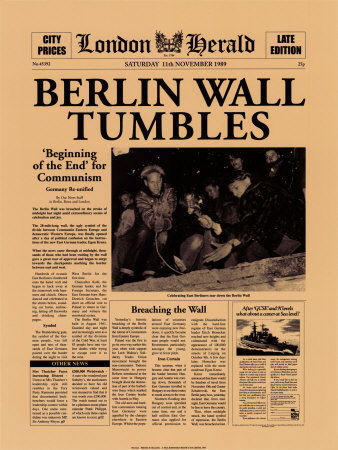
When communism ended (and I deliberately like to say that it was a collapse, not a defeat), it seemed that the ideas and institutions of that system were so thoroughly discredited that they couldn't return in any foreseeable future. And it seemed that no person could possibly - without blushing - dare to publicly defend them.

It seemed unreasonable to expect that people would prefer to trust the state instead of the markets once again; that they would believe that one can distribute more wealth than what is being produced; that people have a right for high living standards rather than that they must deserve them; that an arbitrarily lustrous doctrine is more important than the human freedom; that the wisdom of the anointed is more than the knowledge of the "ordinary" people.

Who was naive

However, we were not quite naive. During the last two decades, many of us were warning that those attitudes were only partially abandoned in the post-communist part of the world (and some third-world countries), that even those countries were quickly depleting the initial momentum, and that the "first" world was seeing no development of this kind at all.

But this opinion of ours was considered - politically correctly - to be just a part of our excessive sensitivity, a misunderstanding, and especially a proof that we were underestimating the "amazing" progress in America and Western Europe and that we were perhaps even jealous. Some extraordinarily blinded people considered our opinion to be a shadow of some obsolete attitudes - such as nationalism, pan-Slavism, and the belief in "extreme" doctrines (e.g. classical liberalism).

At any rate, our opinions were considered to be a product of our half-a-century-long leave of absence from the good company of the civilized and democratic countries and the Western pundits were hoping that we would learn our lesson soon.

Paris didn't understand

We have seen many problematic returns to the past in the European Union, both at the political and the economic level. Whenever some of us said so loudly, we were not only considered to be people of a different opinion, but even foolish, somewhat dumb, and naive people.

In this sense, my recent visit to Paris was insightful. No one disagreed with my opinions. Instead, these opinions were so distant from the French that they didn't understand them. It didn't help that I was only saying things that were completely obvious.

A power cartel

Attentive observers throughout the world are able to see these things. For example, Prof Wolfgang Kasper of Australia is writing about democracy, subsidiarity, and centralization and the European Union is his exemplary case of "de-democratization of the governance". He considers the union to be a "defensive cartel of power that is dragging the society to the bottom of the sea".

In the same group of his examples, we find the "final phase of the Roman Empire controlled from its center, closed China that was controlled by the Ming dynasty 400-500 years ago, centralized Ottoman empire 100-200 years ago, and the European Union that has been increasingly concentrated in Brussels since the 1970s". The increased regulation of the European economy is visible and enormous.

A new element in this ideological chaos is the recent economic downturn that is being attributed to the markets even though it should be obvious that it is a result of serious mistakes in the U.S. economic policymaking and similar mistakes in other advanced countries. And a manifestation of the cyclic character of the economic development.

The towering specter of Marx

However, my motivation to write this article was something else. Time magazine in the U.S. has dedicated one issue to President Obama's inauguration and it discussed the policies of the new administration. And it just happened - probably not by chance - that the editors have reserved six pages to an article called "Rethinking Marx" whose basic thesis was that "[a]s we work out how to save capitalism, it's worth studying the system's greatest critic".

On one hand, Peter Gumbel, the author, says that "we should dismiss his visionary plans for the future". On the other hand, it is argued that we should study his "trenchant diagnosis of the underlying problems of a market economy". It's worth mentioning that the author also considers The Communist Manifesto to be "almost uncannily prescient about globalization's costs and benefits". The author is logically led to the question whether we didn't make a mistake at the end of the 20th century when we prematurely rejected Marx's economic theories.

The reason why I am describing this article so extensively is that neither the author, nor the magazine, nor the timing are marginal. Time magazine has been among the very best titles in the U.S. printed media for many decades. We simply cannot ignore such things.


Václav Klaus, Hospodářské noviny (The Economic Times), February 17th, 2009: the author is the president of the Czech Republic. Translation: L.M.More...

Complete Original Article from Reference Frame

1/15/2009

Of Judges, By Judges, For Judges


By George Will

WASHINGTON -- Last November, 13,402,566 California voters expressed themselves for or against Proposition 8, which said that their state's Constitution should be amended to define marriage as a relationship between a man and a woman. The voters, confident that they had a right to decide this question by referendum, endorsed Proposition 8 by a margin of 52.3 to 47.7.

Now comes California's attorney general, Jerry Brown -- always a fountain of novel arguments -- with a 111-page brief asking the state Supreme Court to declare the constitutional amendment unconstitutional. He favors same-sex marriages and says the amendment violates Article 1, Section 1 of California's Constitution which enumerates "inalienable rights" to, among other things, liberty, happiness and privacy.

Brown's audacious argument is a viscous soup of natural-law and natural- rights philosophizing, utterly untethered from case law. It is designed to effect a constitutional revolution by establishing an unchallengeable judicial hegemony. He argues that:

The not-really-sovereign people cannot use the constitutionally provided amendment process to define the scope of rights enumerated in the Constitution; California's judiciary, although established by the state's Constitution, has the extra-constitutional right to supplement that enumeration by brooding about natural law, natural justice and natural rights, all arising from some authority somewhere outside the Constitution; the judiciary has the unchallengeable right to say what social policies are entailed by or proscribed by the state Constitution's declaration of rights and other rights discovered by judges.

What is natural justice? Learned and honorable people disagree. Which is why such consensus as can be reached is codified in a constitution. But Brown's reasoning would make California's Constitution subordinate to judges' flights of fancy regarding natural justice. Judges could declare unconstitutional any act of Constitution-revising by the people.

In a brief responding to Brown's, Kenneth Starr -- former federal judge, former U.S. solicitor general, current dean of Pepperdine University Law School -- notes the absurd consequences of the proposition that "the people can never amend the Constitution to overrule judicial interpretations of inalienable rights." Long ago, a California court struck down a Sunday closing law because "it infringes upon the liberty of the citizen, by restraining his right to acquire property." And a court struck down a law against scalping theater tickets because it violated rights "inherent in every natural person." By Brown's reasoning, judges could declare unconstitutional any constitutional amendment revising these judicial judgments.

Passing laws by referenda is an imprudent departure from the core principle of republican government -- representation: The people do not decide issues, they decide who shall decide. But the right of Californians to make laws through the direct democracy of referenda is as firmly established as it is promiscuously exercised.

In 2000, voters passed Proposition 22, enacting a law stipulating that marriage is a heterosexual relationship. Last May, California's Supreme Court struck down the law on the ground that there is no "compelling state interest" in not recognizing same-sex marriages under the constitutional clause guaranteeing "equal protection" of the laws. Opponents of same-sex marriage quickly gathered sufficient signatures to place on the November ballot the amendment to the constitution.

The breadth and depth of California's toleration regarding sexual lifestyles refute the worry that gays are a vulnerable minority menaced by majoritarian tyranny. Proposition 8 merely restored to California law the ancient and nearly universal definition of marriage, a definition resoundingly endorsed by the U.S. Congress (85-14 in the Senate, 342-67 in the House) and written into the laws of 47 other states. California advocates of erasing the right to same-sex domestic partnerships could not even get sufficient signatures to put their measure on the November ballot.

Just eight years ago, Proposition 22 was passed 61.4 to 38.6. The much narrower victory of Proposition 8 suggests that minds are moving toward toleration of same-sex marriage. If advocates of that have the patience required by democratic persuasion, California's ongoing conversation may end as they hope. If, however, the conversation is truncated, as Brown urges, by judicial fiat, the argument will become as embittered as the argument about abortion has been by judicial highhandedness.

Brown's reasoning would establish an unassailable tyranny of a minority -- judges -- over any California majority. Brown, 70, California's former and perhaps future governor, once was a Jesuit seminarian. One American Heritage dictionary definition of "jesuitical" is "given to subtle casuistry"; one of that dictionary's definitions of "casuistry" is "specious or excessively subtle reasoning to rationalize or mislead." These definitions, although unfair to Jesuits, are descriptive of Brown's argument.